Natural Agarwood
How Do You Know If Agarwood Is Real? A Practical Field Guide
Canderguardians Team · Published · 8 min read
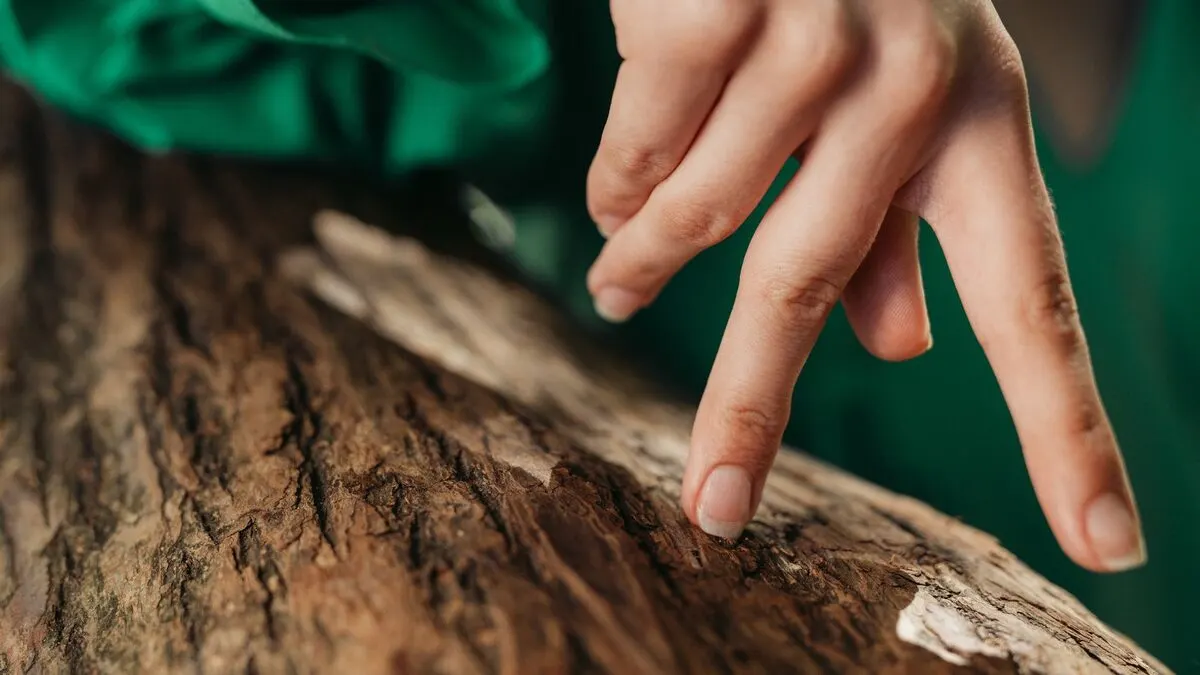
You can tell agarwood is real by combining four checks: visible dark resin streaks through the grain, bead weight heavier than plain wood of the same size, a faint woody or earthy scent at room temperature, and beads that sink — or sink slowly — in water. No single test is definitive without a laboratory, but consistent results across all four are a reliable indicator.
Key Takeaways
- Real agarwood has irregular dark resin zones running through the grain — not uniform brown staining.
- Density is the most practical test: genuine pieces feel noticeably heavy for their size.
- Room-temperature scent should be subtle and woody, not perfume-strong — a strong sweet smell usually means oil injection.
- The sink test helps but is not conclusive; oil-soaked fakes can also sink due to added mass.
- Scientific research confirms that resinous phloem tissue is the definitive structural marker of authentic agarwood — something no visual copy can replicate.
Why Authentication Is Genuinely Difficult
Agarwood forms when an Aquilaria tree responds to infection or injury by producing a dense, resin-rich heartwood. Because this process is unpredictable and slow — taking years in cultivated trees, decades in the wild — real agarwood is scarce relative to demand. That gap creates a large market for imitations: plain wood dyed brown, low-grade chips pressed into bead shapes, or beads soaked in synthetic oud oil.
A 2024 study published in Scientific Reports (PMC) found that the most reliable structural marker distinguishing genuine agarwood from imitations is the presence of resinous included phloem — a specific tissue type that forms only through the natural infection process. Under a microscope, this tissue is unmistakable. Without a microscope, you are working from surface signals, which are useful but never airtight.
That caveat matters. This guide gives you the best field checks available to a buyer without specialist tools. None of them substitute for sourcing from a seller with traceable supply-chain documentation.
Check 1 — Look at the Resin Pattern
The clearest visual signal is the resin distribution inside the wood. In genuine agarwood:
- Dark zones (brown to near-black) appear irregularly, following the grain of the wood rather than spreading evenly across the surface.
- You can often see the contrast between the resin-saturated heartwood and the lighter sapwood — in the same bead.
- The pattern is three-dimensional: turn the bead under light and the dark areas shift and deepen rather than staying flat.
Fakes tend to show uniform brown colouring from stain or dye. Pressed-powder beads may have a consistent density that looks clean but lacks the natural variation of carved wood. The same goes for resin patterns: in wild-type material they are rarely symmetrical, and any bead that looks perfectly patterned should raise a question.
What to Do
Hold each bead close to a light source and rotate it slowly. You are looking for variation, not uniformity. If every bead in a bracelet looks identical in colour and pattern, it is worth asking how that is possible given that natural resin distribution varies bead by bead.
Check 2 — Assess the Weight
Resin is denser than wood. As more resin accumulates in the heartwood, the overall weight of the bead increases. This means:
- A genuine agarwood bracelet will feel heavier in the palm than a plain wood bracelet of the same size.
- Higher-grade pieces — more saturated with resin — will feel heavier than low-grade plantation beads.
- The density should feel uniform through the bead, not top-heavy or hollow.
If you have access to a digital scale, compare against a known reference. A set of 8 mm agarwood beads with good saturation will weigh noticeably more per bead than, say, a sandalwood bracelet of the same diameter.
Weight alone will not catch every fake — a bead soaked in oil gains some mass — but significant lightness in something sold as "high-grade agarwood" is a clear warning sign.
Check 3 — Smell It Without Heating
Genuine agarwood at room temperature produces a scent. It is not loud: expect something faint, woody, slightly earthy or sweet, sometimes with a hint of green. Body heat amplifies it. This subtle quality is actually the point — agarwood perfumers refer to it as a "living" fragrance that evolves through the day.
What is not genuine is a bracelet that smells strongly of sweet perfume or heavy oud oil before you have even warmed it. The mechanics are simple: low-grade or plain wood beads are submerged in synthetic fragrance oil under vacuum or heat, forcing the scent deep into the pores. The result smells convincingly "oud-like" when new but fades completely within weeks, leaving an odourless bead with no natural resin of its own.
How to Tell the Difference
Rub a single bead briskly between your palms for about ten seconds, then smell your hands. Natural agarwood releases a warm, complex scent from friction. Oil-injected beads may release a burst of artificial fragrance that smells more like a commercial perfume than raw wood.
If a seller is willing, ask to heat a bead very briefly over a lighter — not enough to scorch, just enough to warm the surface. Natural agarwood releases a clean, resinous smoke with depth. Plain or synthetic-soaked wood produces a flat, acrid, or chemically sweet odour.
Check 4 — The Water Test
Dense agarwood sinks in water. Lighter, less-saturated pieces float or descend slowly. This is a standard first check and a reasonable quick screen.
Limitations to know:
- Oil injection adds mass. A heavily soaked fake bead may also sink, giving a false positive.
- Many genuine low-grade or plantation agarwood pieces float — they are still real wood with genuine resin, just not enough to overcome buoyancy.
- The test is difficult to perform on a strung bracelet without risking damage to the cord.
Use it as supporting evidence rather than a deciding factor. A piece that floats AND shows uniform colour AND smells of artificial perfume is very likely not what it is sold as. A piece that floats but has good resin marks and an honest scent profile may simply be lower-grade genuine material.
What Certified Sellers Can (and Cannot) Guarantee
Even reputable sellers face limits on what they can verify. It is worth being honest about this: experienced handlers develop judgment over many years, but visual and olfactory assessment has a ceiling. Origin claims — "Vietnamese Aquilaria crassna," "Borneo wild-harvested" — describe what a seller's own supplier documented. Supply-chain transparency varies significantly across the trade.
For our own natural agarwood pieces, we describe what our supplier's documentation says and do not claim independent certification beyond that. We flag plantation versus semi-wild material where we know it, and we do not apply synthetic fragrance to enhance the scent. That is an honest limit to state clearly.
If you need verified provenance for a high-value purchase, look for sellers who can provide CITES documentation (Aquilaria is Appendix II listed) and ideally third-party lab reports. At lower price points, the best protection is learning to read the physical signals above and buying from sellers who describe their material plainly rather than in superlatives.
Buying Agarwood Prayer Beads Specifically
Buddhist prayer bead bracelets made from agarwood carry the same authentication challenges as any other agarwood piece, with one additional consideration: the wood chosen for religious use has traditionally been valued for its scent during meditation rather than for display. That means mid-grade material with a genuine fragrance profile is often a more practical and honest choice than the darkest-looking beads in a shop window.
A bracelet that smells faintly but genuinely of agarwood during quiet practice is doing its intended work. A bracelet that looked impressive in photographs but turns out to be oil-soaked wood is doing neither.
Frequently Asked Questions
Does real agarwood always sink in water? No — lower-grade or plantation agarwood with less resin saturation often floats. Sinking indicates high resin density, which is a quality signal, but floating does not automatically mean fake. Combine the water test with visual and scent checks.
Can you smell real agarwood without burning it? Yes. Genuine agarwood at room temperature produces a faint, complex woody or earthy scent. It becomes stronger with body heat or gentle friction. If you need to heat it before detecting any fragrance at all, the piece may be very low grade — or the "scent" you detect when heated may be from injected oil.
What does oil-injected agarwood smell like? Initially it can smell similar to genuine oud — sweet, deep, woody. The key difference is intensity: oil-injected pieces smell strongly of perfume before any heating, and the scent fades significantly within weeks. Natural agarwood scent is quieter but consistent over years.
Is plantation agarwood real agarwood? Yes. Plantation agarwood is Aquilaria wood that has been farmed and had resin production triggered through inoculation. It is genuine agarwood — just younger and less resin-saturated than old-growth wild material. It is a legal, increasingly common source as wild populations decline.
How can I tell if agarwood beads are pressed powder rather than carved wood? Pressed-powder beads (made from agarwood dust or low-grade chips bound with resin or adhesive) often show a uniform texture without visible wood grain. Run a fingernail lightly along the surface: real carved wood shows distinct grain lines; pressed powder feels smoother and more consistent. The scent of pressed beads also tends to be less complex than that of solid carved wood.