Buddhist-inspired prayer beads
Two bracelets currently in the collection, both strung from natural wood — sandalwood in one, and a second piece whose exact wood type isn't marked clearly enough on the supplier tag for us to name with confidence.
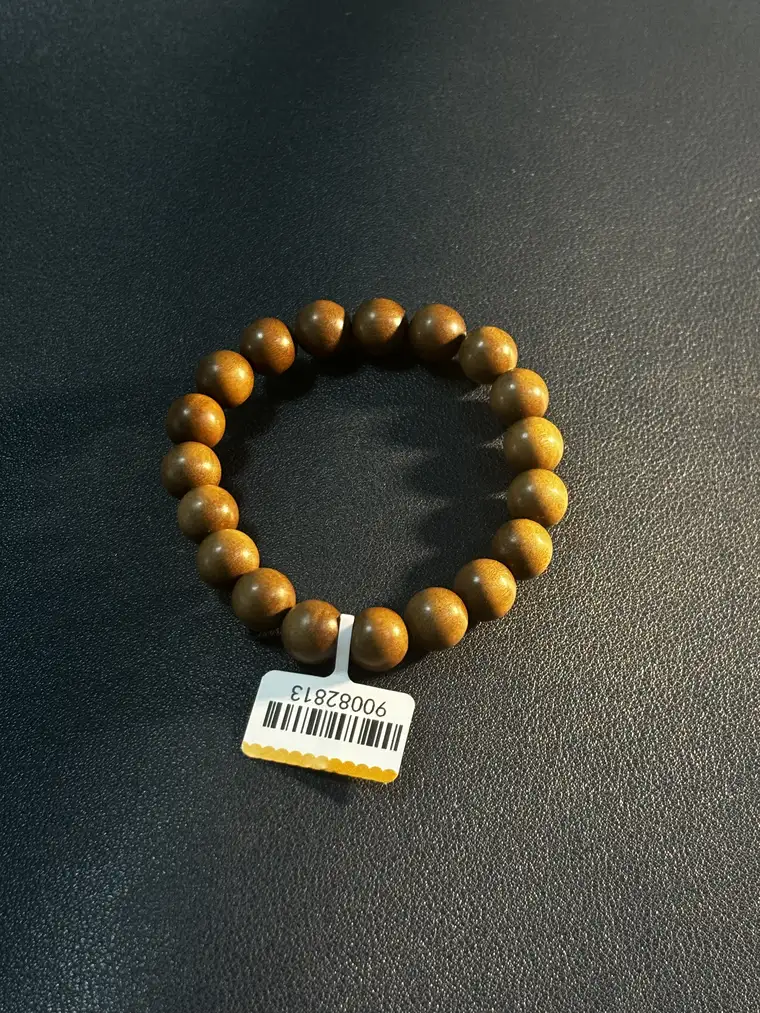
Sandalwood
Marked on the supplier's tag as old-growth sandalwood. Sandalwood beads tend to run lighter and smoother than agarwood, and carry their own faint, natural scent that fades slowly with wear.
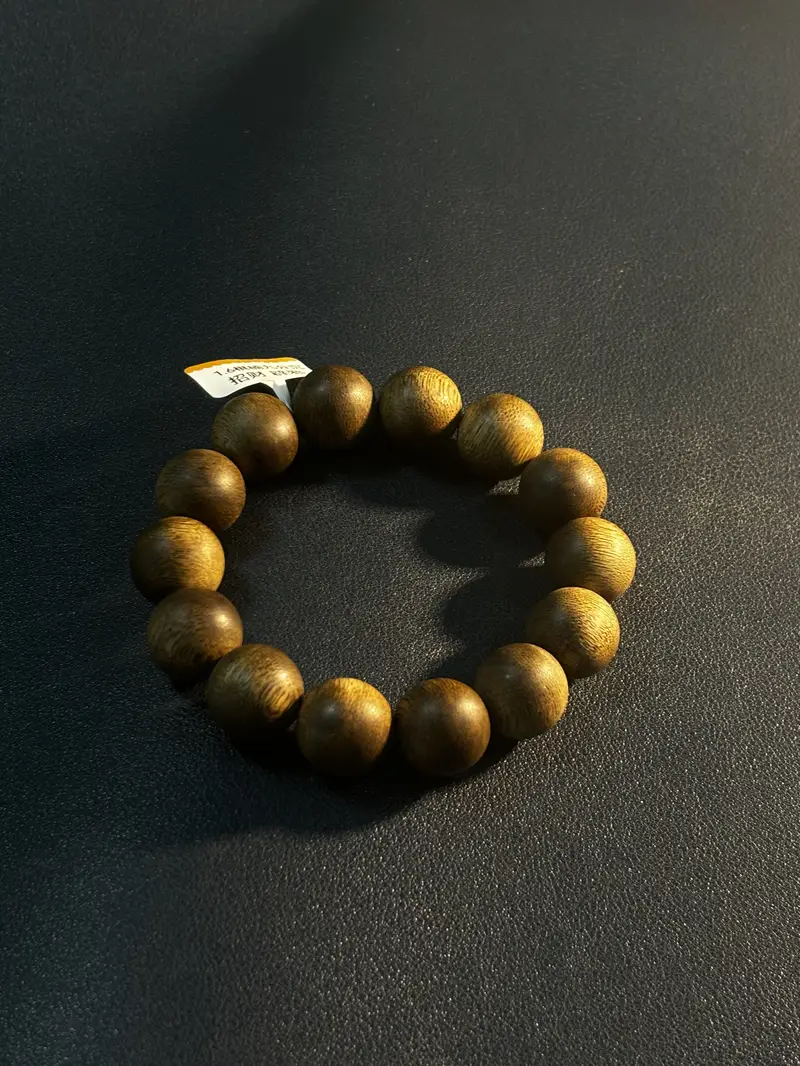
Natural wood
A round-bead bracelet in a warm natural wood tone. We're intentionally not naming the exact wood species for this piece — the supplier tag on our copy isn't legible enough to state it with confidence, and we'd rather say that plainly than guess.
What are prayer beads used for?
Traditionally, a full mala has 108 beads and is used to count repetitions during meditation or chanting — one bead per repetition, the strand keeping track so your mind doesn't have to. A wrist-sized bracelet like ours is a shorter, everyday version: less a counting tool, more something to hold or wear while you sit quietly.
How do you wear or use one?
There's no fixed rule. Some people wear it on the wrist all day; others keep it nearby and only hold it while meditating, reading, or sitting still for a few minutes. We'll say plainly: we sell these for their craftsmanship and natural materials, and we let each person decide what meaning, if any, they attach to wearing one.
Related guides
- Natural Agarwood Bracelet: A Plain-Language Buyer's Guide
A natural agarwood bracelet carries one of the rarest fragrant woods in the world — but quality varies widely. Here's how to read the difference before you buy.
- Real Agarwood Bracelet: How to Identify the Genuine Material
To identify a real agarwood bracelet, check for dark irregular resin streaks, noticeable bead weight, and a faint woody scent at room temperature — no heating needed. Here's a bead-by-bead walkthrough.
- Fake Agarwood Beads & Oil Injection: How to Spot Them
Oil-injected agarwood beads are the most common fake on the market — plain or low-grade wood forced with synthetic fragrance to mimic real oud. Here's how to spot them before you buy.