Natural Agarwood
Natural Agarwood Bracelet: A Plain-Language Buyer's Guide
Canderguardians Team · Published · 7 min read
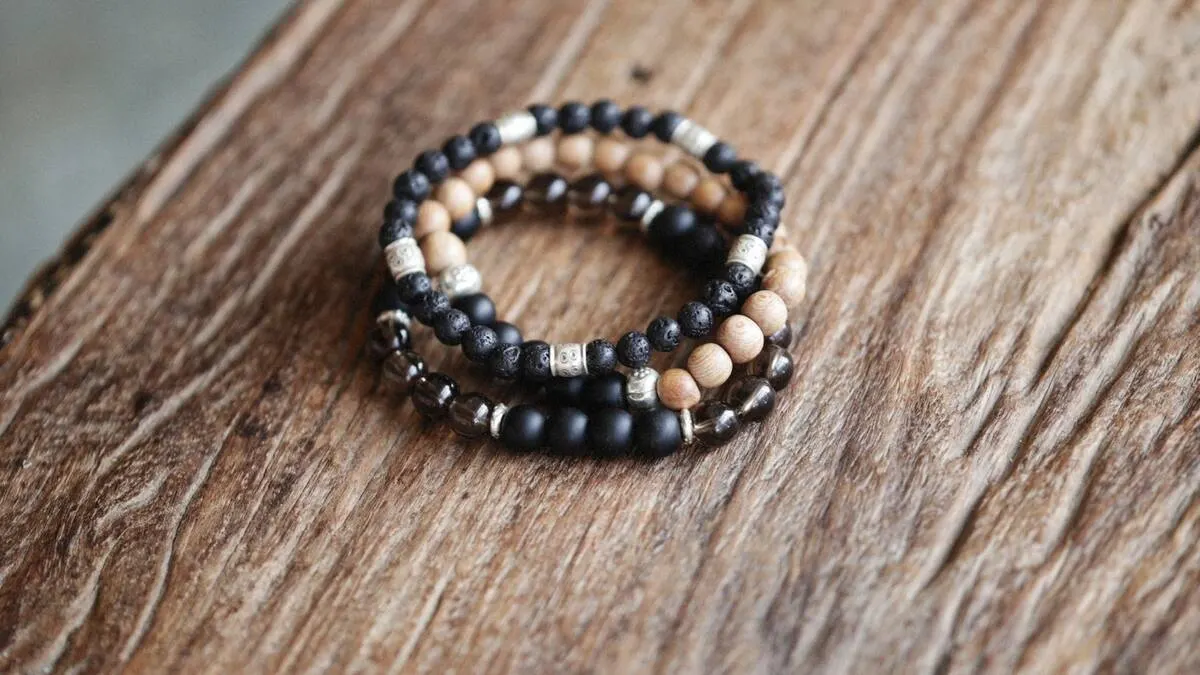
A natural agarwood bracelet is a string of beads carved from Aquilaria wood that has been transformed by resin — the same fragrant resin that makes oud one of the world's most valuable raw materials. Genuine pieces carry a warm, earthy scent, feel noticeably dense in the hand, and darken distinctly at the resin-saturated zones. Because demand far outpaces supply, imitation and low-grade material are common at nearly every price point.
Key Takeaways
- Genuine agarwood smells subtly woody or sweet at room temperature — without heating.
- Bead density and resin saturation (not just color or labeling) are the most reliable quality signals you can assess without a lab.
- Origin labels such as "Vietnamese" or "Borneo" describe where the tree grew, not a graded quality standard — treat them as starting context, not a guarantee.
- 8 mm beads (a common standard for wrist bracelets) balance comfort and resin content better than very small or very large beads for daily wear.
- Price varies enormously: low-grade agarwood starts under $30, while Qi Nan-grade or heavily saturated pieces can run into thousands.
What Is a Natural Agarwood Bracelet?
Agarwood — also called oud, aloeswood, or ch'en-hsiang — forms when certain Aquilaria or Gyrinops trees respond to physical injury or fungal infection by producing a dark, resin-rich heartwood. The resulting material is dense, aromatic, and chemically complex. It takes years, sometimes decades, to accumulate enough resin to be considered usable quality.
Bracelet beads are drilled from this heartwood, then strung on elastic cord or silk thread. Bead sizes typically run from 6 mm to 14 mm in diameter; 8 mm is the most common for a standard adult wrist. Some Buddhist prayer bead bracelets use a traditional 108-bead count on a longer mala; wrist-length versions usually hold 18 to 21 beads.
The appeal is both sensory and symbolic. Agarwood has been used in religious and meditative contexts across Buddhist, Islamic, and Hindu traditions for over a millennium. Wearing a bracelet keeps the scent close throughout the day and, for many wearers, serves as a tactile prompt during meditation practice or mindful breathing.
How to Tell If Agarwood Is Genuine
This is where most buyer guides become vague — and where honest hedging matters. Short of laboratory analysis (gas chromatography–mass spectrometry), no consumer-side test is conclusive. What you can do is stack several signals and look for consistency.
The Sink Test
Dense, highly resin-saturated agarwood sinks in water. Lightly saturated wood floats or sinks slowly. This test works reasonably well on loose beads but is inconvenient once a bracelet is strung. Some sellers misrepresent this: beads soaked in artificial fragrance oil can also sink due to added weight. Use it as one data point, not a verdict.
Room-Temperature Scent
Genuine agarwood produces a subtle, complex scent without any heating. If a bracelet smells strongly of sweet perfume or alcohol at room temperature, it has almost certainly been soaked in synthetic oud oil — a common practice for low-grade or non-agarwood beads. The scent of natural agarwood tends to be restrained: faintly woody, slightly sweet, sometimes with earthy or green undertones.
Visual Resin Marks
Resin-saturated zones appear darker — brown to near-black — against the lighter sapwood. Uniform color across all beads is a caution sign; natural agarwood almost always shows variation bead to bead. The resin pattern is irregular, not printed or painted.
Weight
Compared with uninfected Aquilaria wood or common sandalwood, genuine agarwood beads feel noticeably heavy for their size. Pick up two seemingly similar bracelets: the one that surprises you with its density is likelier to be higher grade.
Supplier Labels
Labels such as "100% natural," "A-grade," or "Vietnamese agarwood" describe what the seller believes or wants you to believe — they are not independently certified. Some suppliers do work from traceable, sustainably harvested material and have documentation to show for it. Others are sincere but unable to verify their supply chain beyond their own supplier's word. When we describe our own pieces, we go by what our supplier tags say; we cannot independently certify origin or grade beyond that.
Bead Size, Grade, and What Drives the Price
Bead size and wood grade are the two things that most shape what a bracelet costs, and both are easier to judge once you know what each one means.
Bead Size
For a single-wrap wrist bracelet:
- 6 mm — lighter, more subtle; good for those who prefer understated jewelry.
- 8 mm — the most versatile size; enough surface area to carry visible resin marks and a clear scent; comfortable for all-day wear.
- 10–12 mm — more presence on the wrist; sometimes used for gift-quality pieces; heavier.
Larger beads require more raw wood per piece and, if the resin distribution is good, more saturated material. That generally means a higher price per bead.
Wood Grade and Resin Saturation
The agarwood trade uses informal grading systems that vary by country and seller. Broadly:
- Low-grade / plantation agarwood — farmed Aquilaria with induced resin (inoculation methods). Lighter color, milder scent, more affordable. Not fraudulent — just younger and less saturated.
- Wild agarwood — naturally infected, older growth. Scarcity drives price sharply upward.
- Qi Nan (Kynam / Kỳ Nam) — the rarest classification, marked by a distinctly complex, almost sweet scent and very high resin saturation. Prices can reach thousands of dollars per bracelet for authenticated pieces.
For daily-wear bracelets, mid-grade plantation or semi-wild agarwood offers a reasonable balance of authentic scent and manageable cost. Specialist retailers often list several grades with detailed descriptions — comparing that language around saturation and origin is a useful reference point when you're learning to read listings.
Price Ranges (Approximate, as of 2026)
| Grade | Typical Wrist Bracelet Price |
|---|---|
| Plantation / low-grade | $20–$80 |
| Mid-grade semi-wild | $80–$400 |
| High-grade wild | $400–$2,000+ |
| Qi Nan / Kynam | $2,000–$10,000+ |
These are rough benchmarks. A very low price for a bracelet labeled "wild Vietnamese agarwood" is a red flag. A very high price alone is not a quality guarantee.
Wearing and Caring for Your Bracelet
How to Wear It
A natural agarwood bracelet is most often worn on the left wrist, following a Buddhist tradition that the left side is closer to the heart and receives energy more readily. In practice, wear it on whichever wrist is comfortable. There is no rule that requires religious intent — many wearers simply appreciate the scent and the feel of the wood.
Our own natural agarwood collection includes a Qi Nan prayer bead bracelet for those who want a high-quality piece for daily wear or as a thoughtful gift. The bracelet wears better when it has occasional contact with skin — body warmth gently releases the wood's natural fragrance.
Care
- Keep away from perfume, hand sanitiser, and harsh detergents — these degrade the resin and alter the scent.
- Remove before swimming or prolonged water exposure; elastic cord weakens with repeated wetting.
- Store in a breathable pouch or wooden box rather than an airtight container; agarwood benefits from mild airflow.
- Over time, natural oils from your skin may darken and polish the surface — this is normal and considered desirable.
Do not apply agarwood oil or synthetic oud spray to the bracelet to "refresh" the scent. It masks the wood's natural fragrance and can coat the beads in residue.
Frequently Asked Questions
Does a natural agarwood bracelet smell without being heated? Yes — gently. At room temperature, genuine agarwood produces a faint, complex scent. It becomes more pronounced when warmed by body heat. If a bracelet smells strongly of perfume before you even pick it up, it has likely been soaked in fragrance oil.
What is the difference between agarwood and sandalwood? They come from different tree families and have distinct scents. Sandalwood (Santalum species) has a creamy, soft, steady fragrance and is widely available. Agarwood (Aquilaria species) forms only under specific stress conditions, is far rarer, and has a deeper, more complex, resinous character. Both are used for prayer beads and meditation accessories.
How do I know if agarwood is real? Combine several checks: room-temperature scent (subtle, woody), bead weight (noticeably dense), and visible resin marks (dark irregular zones, not uniform color). No single test is definitive without lab analysis, but consistent results across all three indicators are reassuring.
Is plantation agarwood inferior to wild agarwood? Not necessarily inferior — it is different. Plantation agarwood uses induced resin production on farmed trees. It is less scarce, lighter in scent, and more sustainably produced than old-growth wild material. For a daily-wear bracelet at a moderate price, well-made plantation agarwood is a practical and honest choice.
Can I wear an agarwood bracelet every day? Yes, and daily wear is generally good for the wood — body heat slowly releases the natural fragrance, and skin oils develop a mild patina on the surface. The main risk to daily wear is the elastic cord: avoid extended water exposure to preserve it.